

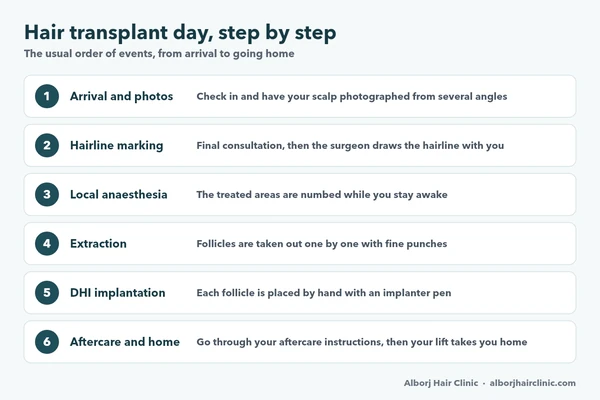
A hair transplant day follows a set order. You arrive for photos and a final consultation, then the scalp is numbed, and follicles are taken out one by one and implanted. You leave with clear aftercare instructions and a lift home.
It can be a long day, and the clinic will tell you how long your own session is likely to take. Here is what happens at each stage, and how to prepare so the day runs smoothly.
How should you prepare for the day of a hair transplant?
A little planning makes the day far easier. Your clinic will send its own instructions, and these always come first. A few practical points apply to most people:
- Wear a comfortable button-up top. You will not want to pull anything over your head once the procedure is done.
- Eat before you arrive. A proper breakfast helps you stay comfortable through a long session, unless your clinic tells you otherwise.
- Arrange a lift home. Ask a friend or relative to collect you, or book a ride in advance. Many clinics advise against driving yourself.
- Tell the clinic about any medicines you take. The team will say whether anything needs to change before the day.
- Arrive with clean hair. Unless your clinic says otherwise, skip styling products on the day.
- Bring something to pass the time. Headphones and a podcast or playlist can help during the longer stages.
If you are visiting Dubai for the procedure, a hotel near the clinic keeps the journey back short. Plan a quiet evening, with nothing in the diary.
What happens when you first arrive at the clinic?
The day starts with the practical things. You check in, complete any remaining forms and get settled.
The team then photographs your scalp from several angles. These pictures are a medical record of your starting point and help when your progress is reviewed later.
Next comes the final consultation with the surgeon. It is your chance to ask any last questions and confirm the plan you agreed earlier.
The surgeon then draws the new hairline on your skin with a pen. You can check it in the mirror and talk it through before anything else happens.
“The marking is the moment to speak up. I would rather spend extra time adjusting the line with a patient than leave them unsure about it later. Once we both agree, the work can begin.”
How is the scalp numbed, and does it hurt?
Everything is done under local anaesthesia. You stay awake, but the areas being treated are numb.
The anaesthetic is given with small injections, starting with the donor area at the back of the head. These usually cause a brief sting, and after that most people describe mild discomfort, with little or no pain.
If you feel anything during the session, tell the team. They can top up the anaesthetic when needed.
Feeling a little nervous beforehand is normal. Ask the team to talk you through each step as it happens, so nothing comes as a surprise.
What happens during extraction and implantation?
Extraction comes first. You usually lie face down while follicles are removed one by one from the back and sides of the head. Fine FUE punches are used for this.
Each follicle is a small natural group of about two to four hairs, known as a follicular unit or graft. Because they come out individually, no stitches are needed.
There are short breaks along the way. You can stretch, use the bathroom and have something to eat before the next stage begins.
Implantation follows. With DHI (Direct Hair Implantation), each follicle is loaded into an implanter pen and placed straight into the thinning area by hand.
The angle and direction of every hair are set as it goes in, which shapes how natural the result looks. Many people rest or listen to something while this careful work goes on.
What happens before you go home?
Once the last follicle is in place, the team checks both areas and explains how to look after them. Listen closely here, because the first days matter.
Aftercare instructions usually cover:
- How and when to wash your scalp
- How to sleep in the first nights, often with your head slightly raised
- What to avoid, such as touching, scratching or pressing on the grafts
- When you can return to work, exercise and wearing a hat
- Who to contact if a question comes up once you are home
Ask for the instructions in writing so you can check them later. Then your lift takes you home, and the rest of the day is for resting.
What should you expect after the day itself?
Expect a little redness, some small scabs and perhaps mild swelling for the first few days. Your clinic’s washing routine helps the scabs come away gently.
Within a few weeks, many of the transplanted hairs fall out, which is a normal stage. The first new hairs tend to come through at around three months, and the finished look takes around a year.
Keep the clinic’s contact details close for the first nights. If anything worries you, such as bleeding or swelling that gets worse, call rather than wait.
About Alborj Hair Clinic
Alborj Hair Clinic is a hair transplant clinic in Mazaya Centre, Al Wasl, Dubai. Its surgeon, Dr Dimitrios Ziakas, has 24 years of experience and has performed more than 4,000 hair transplant procedures. He is a member of the International Society of Hair Restoration Surgery (ISHRS) and uses the DHI (Direct Hair Implantation) technique.
To ask how your own procedure day would be planned, you can get in touch with Alborj.
Past patients’ results are shown as before-and-after case studies on the clinic’s website.
Frequently asked questions
Are you awake during a hair transplant?
Yes. Local anaesthesia numbs the treated areas while you stay awake, and most people feel only mild discomfort.
Can I eat during the procedure?
There are short breaks during the day, and you can usually eat then. Have a proper meal before you arrive unless your clinic says otherwise.
Can I drive home after a hair transplant?
Many clinics advise against it. Arrange a lift or book a ride, and follow your own clinic’s instructions.
How long does the procedure take?
It depends on the size of the area and your plan. The clinic will tell you how long your session is likely to take before the day.