


Moving boxes and household belongings
Sorting belongings, lining up moving day services, updating important information, the moving process entails many tasks that can often feel overwhelming and competing for your attention. On top of this, there’s the emotional element of determining which belongings you want to keep after living with them for many years.
This is especially true if you’re moving out of a larger home, going through other major life changes, or if you have a family member that requires extra care and support.
Of course, moving does involve getting your things from one place to the next. But it’s so much more than that! It’s about making the entire moving process as organized and stress-free as possible, saving you time and energy so that you can walk into your new home and feel like you can immediately start settling in.
Define What the New Home Needs
Think about your new home before you start sorting and packing your things. What do you know about the size of the new space, the number of rooms, how accessible it is, storage options, etc.? These are all things to keep in mind when determining what you’ll bring with you.
Chances are there won’t be room for all of your things, all of your furniture, collections, and duplicate dishes and kitchenware. Instead of feeling disappointed by this realization, consider it an opportunity to pare things down and focus on what’s most practical and meaningful to you.
Some questions to help you determine what to keep:
- What furniture do you want/need to feel at home in your everyday environment?
- What things will serve you in practical ways?
- What can you give away to friends and family, sell, donate, or recycle?
- What things will you want access to immediately in your new home?
As you’re sorting through your things, consider creating a floor plan or making a list of belongings room-by-room to help determine where things will go once you arrive at your new place. This can help prevent you from getting boxes piled up in every hallway and corner once you get to your new place and can help make unpacking easier.
Give Sorting Enough Time
Depending on the size of your home and the number of years you’ve lived there, this step could be the most time-consuming part of the moving process. Closets, cabinets, attics, and basements can often hold more than you might remember!
When possible, we recommend allotting at least 30 days to tackle this part of the moving process. This way, you won’t be rushing from room to room making split-second decisions about every single thing you own.
It can help to tackle this task by starting in rooms or areas that hold the least sentimental value (Science covers this at science.org/doi/10.1126/science.1235207), kitchen items you don’t use, linens, office supplies, etc. Save the trickier stuff (i.e. family heirlooms, photographs, etc.) for later on when you’ve gained a bit of momentum.
You may also want to organize your belongings by category: keep, gift, sell, donate, recycle, discard, etc. Labeling things this way can also help limit indecisiveness down the road!
Skip This if the Household Is Already Minimal
If you and your family only have a few pieces of furniture and personal belongings, a thorough decluttering and organizing system may not be the best use of your time. Instead, consider focusing your energy on other logistical details like scheduling the move, packing things up safely, and efficiently setting up your new place.
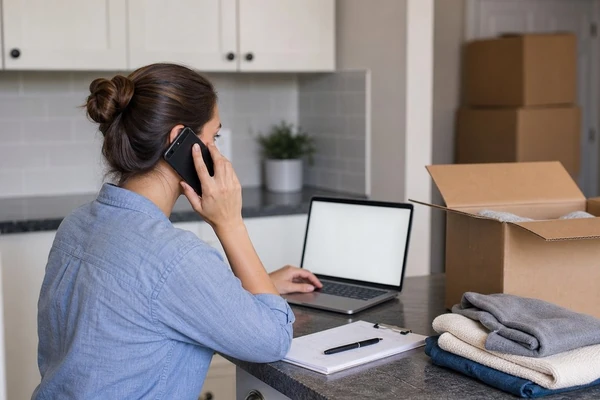
Household moving supplies and packed belongings
Coordinate the Practical Household Tasks
Hiring a moving or relocation support team can be helpful in many of these situations, especially if family and friends live far away and won’t be able to lend a hand, you’re downsizing or looking to simplify your life, or you have health or physical limitations that would make packing or lifting unsafe for you; learn more here about NYC Relocation with Caring Transitions is the page that matches this option.
Make the First Days Easier
When you do arrive at your new place, you’ll want to prioritize setting up the areas that will make an immediate difference: a place to sleep, a working bathroom, kitchen essentials, and somewhere nice to sit! Having these things taken care of right away can help you get a good night’s sleep and maintain a sense of normalcy and routine while everything else may still feel new and unfamiliar.
We also recommend keeping a box of everyday items, important documents, toiletries, chargers, a change of clothing, and other essentials separate from the rest of your belongings and within easy reach so you’re not having to dig through boxes to find things you need on a regular basis. Other decorative or less-essential items can always wait to be unpacked!
Whether you’re hiring someone for help or tackling the process on your own, we hope these tips help you feel more prepared for moving day! To get started, walk through your home and start checking off any must-have items that you’ll need on hand the first night in your new home!